On a night defined by defense and field position, the most reliable offense on the field belonged to Kenneth Walker III. The Seahawks running back delivered a performance that cut through the tension of Super Bowl LX, earning MVP honors in Seattle’s 29–13 victory over the New England Patriots at Levi’s Stadium.
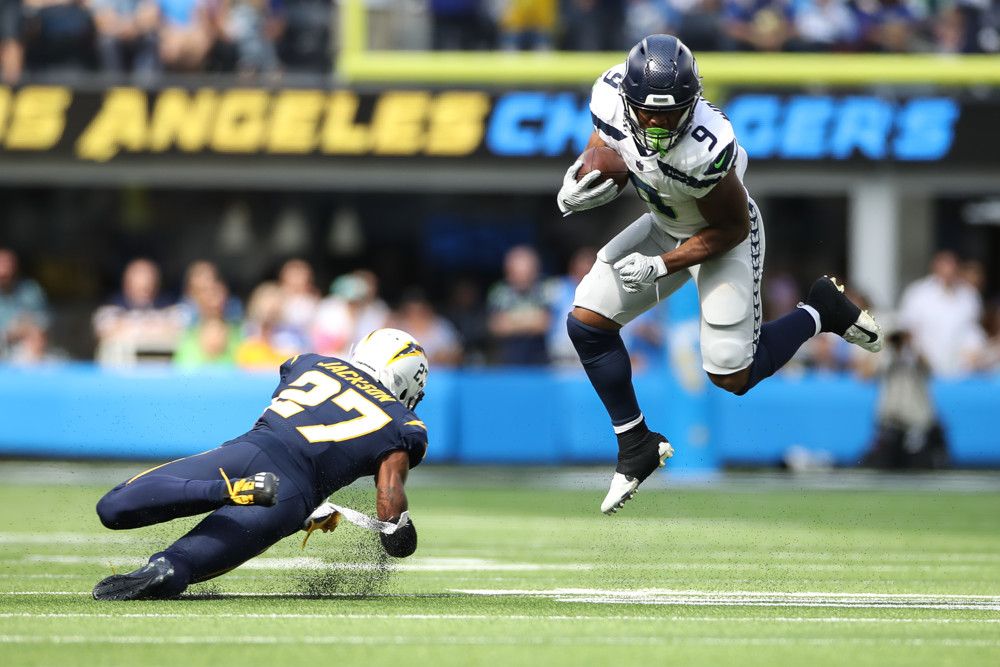
Walker finished with 135 rushing yards on 27 carries and added two catches for 26 more, accounting for 161 scrimmage yards in a game where consistent offense was hard to find. His effort made him the first running back to be named Super Bowl MVP since Terrell Davis accomplished the feat for Denver in 1998, and his rushing total marked the highest in the game since Davis’ 157 yards nearly three decades ago.
The timing of the performance could hardly have been more significant. At 25 years old and approaching free agency, Walker carried a heavier burden throughout the postseason after Zach Charbonnet was lost to a torn ACL in the divisional round. He responded by scoring four touchdowns in the two playoff games leading up to the Super Bowl and then becoming the engine of Seattle’s offense on the sport’s biggest stage.
Despite the individual accolades, Walker consistently framed the night as a team achievement. He spoke more about the Seahawks’ second Super Bowl title than his own MVP trophy, emphasizing his role within a collective effort rather than a personal milestone.
Walker’s impact became clear midway through the first half. On Seattle’s fourth possession, he broke free for runs of 29 and 30 yards in quick succession, jump-starting an offense that had struggled to finish drives. The Seahawks settled for a field goal on that series, but Walker’s rhythm was established. By halftime, Seattle led 9–0, and Walker had already piled up 100 of the team’s 183 total yards.
After the break, the Seahawks continued to lean on him. A 20-yard catch-and-run set up another field goal, and in the fourth quarter Walker delivered bruising runs of 14 and 10 yards as Seattle stretched its lead to 22–7, effectively putting the game out of reach. Though he didn’t officially score a touchdown, Walker came close with a 49-yard burst that was wiped out by a holding penalty, a moment rendered irrelevant by the Seahawks’ control of the game.
New England focused much of its defensive attention on limiting the passing game, bottling up Jaxon Smith-Njigba before he exited in the second half for a concussion evaluation and holding Sam Darnold to just 5.0 yards per attempt. That approach left Walker as the focal point, and he punished it with patience, balance through contact and explosive acceleration. By the end of the night, he had produced nearly half of Seattle’s total offense.
The performance also stood out for what it did to the Patriots’ defense. No team, including playoff opponents, had allowed that many rushing yards to New England all season. Walker closed the year with four straight games of at least 111 rushing yards, including the regular-season finale that secured Seattle the top seed, and Super Bowl LX became another chapter in that dominant stretch.
From the sideline, head coach Mike Macdonald praised not only Walker’s vision and decisiveness but also the collective commitment to the run game, crediting the offensive line and tight ends for their role. Darnold echoed that sentiment, saying the version of Walker seen on Sunday was the same back he’d watched all season — trusting the scheme, trusting his blockers and delivering when it mattered most.
As confetti fell, Walker acknowledged the weight of the moment but remained grounded in the reality of how it was achieved. Winning Super Bowl MVP was surreal, he said, but it was inseparable from the teammates around him. On a night when offense came at a premium, Kenneth Walker III didn’t just stand out — he carried Seattle to the top.