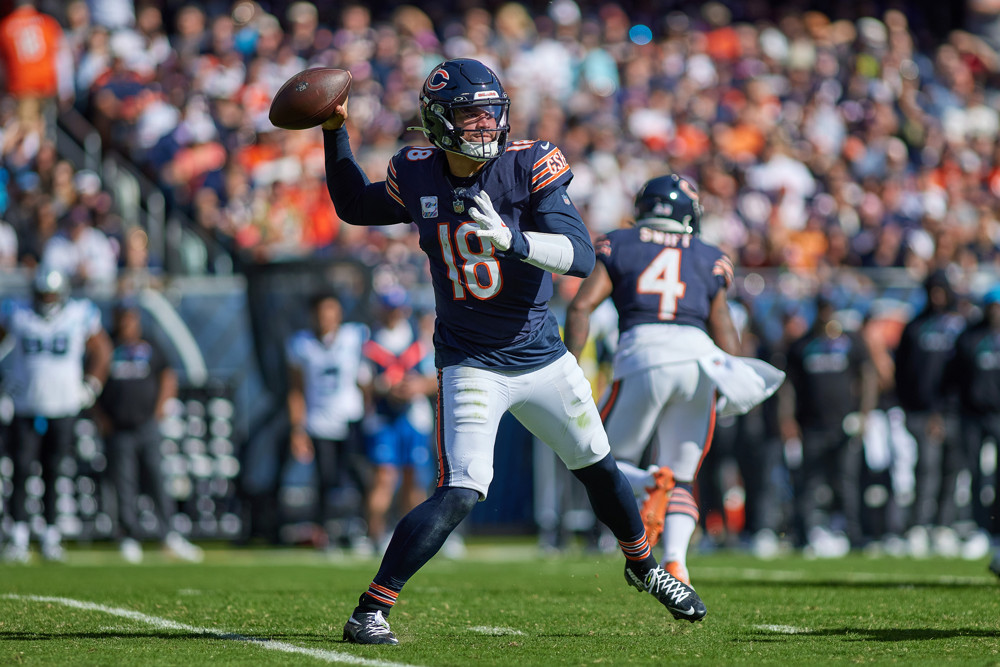
The Chicago Bears finished the 2025 regular season with an 11‑6 record, earning the No. 2 seed in the NFC playoffs and setting up a wild‑card matchup against the No. 7 seeded Green Bay Packers in a divisional rivalry game. Chicago’s offense combined efficient passing with a productive ground game, helping the Bears secure home‑field advantage and a postseason berth.
Quarterback Caleb Williams led the Bears’ passing attack, completing 312 of 493 attempts (63.3 percent) for 3,942 yards, 28 touchdowns, and 10 interceptions over 17 games. Williams’ ability to deliver consistent production and spread the ball to multiple playmakers was a driving force behind Chicago’s strong finish. He also became the first quarterback in franchise history to surpass 3,900 passing yards in a season.
Running back D’Onta Foreman anchored the rushing attack, carrying the ball 291 times for 1,009 yards and 7 touchdowns, averaging 59.4 rushing yards per game. Foreman’s workhorse presence helped keep Chicago ahead in clock management and sustain long drives when necessary.
In the receiving game, tight end Trey McBride led the team with 126 receptions for 1,276 yards and 7 touchdowns, averaging 75.1 receiving yards per game — a position‑leading performance among tight ends league‑wide. Nico Collins also provided big‑play ability with 87 receptions for 1,117 yards and 5 touchdowns, while Chris Olave added 75 catches for 1,163 yards and 9 touchdowns. Chicago’s trio of high‑volume receivers gave Williams multiple vertical threats and chain‑moving options.
Additional contributors included Darnell Mooney (54 receptions, 665 yards, 4 TDs) and Rome Odunze (47 receptions, 670 yards, 3 TDs), rounding out a deep wide receiving corps that kept Chicago’s passing game versatile and dynamic.
Defensively, linebacker T.J. Edwards paced the Bears with 149 total tackles, bringing physicality and consistency to Chicago’s front seven. Gervon Dexter produced 8.5 sacks, while Jaquan Brisker led the secondary with 4 interceptions, providing crucial takeaways that helped Chicago win close games during the stretch run.
Chicago’s offensive totals, including 3,942 passing yards and 1,009 rushing yards, reflect a balanced and potent attack capable of scoring from multiple areas of the field, while the defensive unit made key stops and turnovers in high‑leverage situations.
The Bears will host the Packers in the wild‑card round on Saturday, January 10, looking to capitalize on their home‑field advantage and leverage their deep pass game and stout defensive play to advance into the divisional round.